
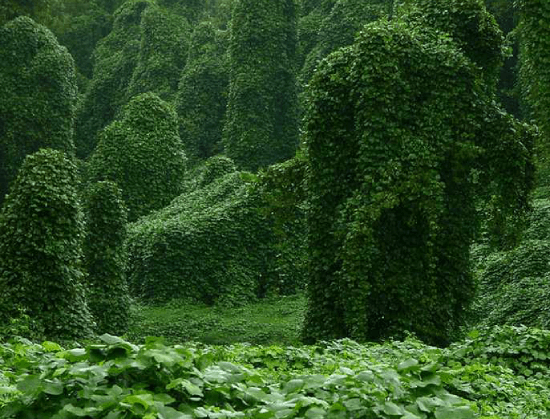
Kudzu climbs thirty feet in a summer. Privet turns a clean fence line into a wall of brush in two seasons. If you own land anywhere around Hendersonville, NC, you already know invasives don’t wait. They spread, they choke out native growth, and they make usable acreage unusable faster than most people expect.
We clear invasive species with forestry mulching. One pass, ground to mulch, land you can actually walk again.
The good news is mulching handles almost all of it. Vines, shrubs, saplings, thickets. The machine doesn’t care what’s in front of it. Chemical treatment and ongoing maintenance are usually part of the picture too, but mulching is what gives you a fighting chance. Without it, you’re just trimming the edges of a problem that keeps winning.
What Forestry Mulching Actually Does To Invasives
Forestry mulching uses a tracked machine with a heavy rotary head that grinds standing vegetation into a mulch layer right where it stood. Vines, brush, saplings, thickets, all of it goes down in a single pass. No burn piles. No hauling. No stripping the soil down to dirt.
For invasive removal specifically, that’s the whole advantage. An invasive species mulcher cuts the plant at or below the surface and turns it into ground cover on the spot. The soil structure stays intact. The mulch layer stays put. The site looks finished when we drive off.
That’s all you really need to know about the equipment. The interesting part is what it does to the plants.

Why Mulching Beats Hand-Clearing And Herbicides
Hand-clearing invasive plants is brutal work. A crew with chainsaws and loppers can spend a week on an acre of privet and still leave half the root mass intact. Herbicides work on some species, but they drift, they run off into creeks, and they kill desirable plants right along with the targets. Neither option scales when you’re looking at five or ten acres of overgrowth.
Invasive species mulching covers ground fast. A mulcher can knock out an acre a day on reasonable terrain, sometimes more. Invasive plant removal happens mechanically, so there’s no chemical runoff into local waterways and no waiting period before you can use the land again. Labor hours drop dramatically. You’re paying for one operator and one machine instead of a crew of five with hand tools.
The other thing mulching does that the alternatives don’t is leave the soil alone. Dozers scrape and compact. Herbicides sterilize. Mulching grinds what’s on top and leaves everything below untouched, which matters when you want native plants to come back.
Invasive Vines
Vines are some of the worst invasives in western North Carolina, and they’re some of the best candidates for mulching. A mulcher pulls them down from trees, grinds them into the ground, and cuts off the light they need to regrow. The mulch layer that’s left behind smothers new shoots trying to come up from the root crown.
These are the invasive vines we commonly deal with:
- Kudzu (Pueraria montana)
- Japanese honeysuckle (Lonicera japonica)
- English ivy (Hedera helix)
- Chinese/Japanese wisteria (Wisteria sinensis, W. floribunda)
- Wintercreeper / creeping euonymus (Euonymus fortunei)
- Porcelain berry (Ampelopsis glandulosa)
- Oriental bittersweet (Celastrus orbiculatus)
- Mile-a-minute vine (Persicaria perfoliata)
Kudzu and bittersweet are the ones that bring people to us most often. Both respond well to invasive removal forestry mulching, though kudzu in particular usually needs a follow-up pass the next season to catch regrowth.
Invasive Trees
Small and mid sized invasive trees grind down the same way shrubs do. A mulching head handles anything up to roughly eight inches in diameter without trouble, and larger specimens can be dropped and fed through in sections. Stumps often benefit from a cut stump herbicide treatment right after mulching, because most invasive trees will resprout aggressively from the base if you don’t interrupt the cycle.
Common invasive trees we take out:
- Bradford pear / Callery pear (Pyrus calleryana)
- Tree-of-heaven (Ailanthus altissima)
- Chinaberry (Melia azedarach)
- Princess tree / paulownia (Paulownia tomentosa)
- White mulberry (Morus alba)
Tree of heaven is the trickiest of the bunch. It spreads by root suckers and will throw up a dozen new stems after a single cutting, so plan on follow up.
Invasive Shrubs & Thicket-Formers
Dense thickets are exactly what a mulcher was built for. Where a hand crew sees a week of misery, the machine sees a morning. Shrubs like privet and autumn olive grow in walls that swallow fence lines and pasture edges, and mulching opens them up in a single pass without disturbing the ground underneath.
Shrubs and thicket formers we regularly clear:
- Chinese privet (Ligustrum sinense)
- Japanese privet (Ligustrum japonicum)
- Glossy privet (Ligustrum lucidum)
- Autumn olive (Elaeagnus umbellata)
- Multiflora rose (Rosa multiflora)
- Japanese barberry (Berberis thunbergii)
- Nandina / heavenly bamboo (Nandina domestica)
- Bush honeysuckles (e.g., Amur honeysuckle, Lonicera maackii)
- Mimosa / silk tree (Albizia julibrissin)
Privet and multiflora rose are the two we see on almost every job in this region. Both respond well to invasive species removal by mulching, especially when combined with seasonal follow up on regrowth.
Invasive Grasses, Reeds, And Groundcovers
Grasses and groundcovers are a mixed bag for mulching. Some species respond well to being ground into the soil. Others spread aggressively from rhizomes and need mechanical clearing combined with other control methods. We’ll walk the site and give you an honest read on what to expect for your specific situation.
Grasses and groundcovers we encounter:
- Cogongrass (Imperata cylindrica)
- Japanese stiltgrass (Microstegium vimineum)
- Common reed / Phragmites (Phragmites australis)
Cogongrass is federally listed as a noxious weed and needs careful handling. If you think you have it, let us know before the walk through so we can plan accordingly.
Will Invasives Grow Back After Mulching?
Honest answer: it depends on the species, and anyone who tells you otherwise is selling you something.
Some invasives are effectively done after one thorough pass. Shallow rooted vines and young saplings often don’t come back once they’re ground down and buried under their own mulch.
Others, especially anything that spreads from deep roots or rhizomes like kudzu, tree of heaven, and cogongrass, will push up new growth and need a second pass or targeted follow up treatment.
What mulching does reliably is reset the site. It gets rid of the bulk of the problem fast, gives native plants an opening to come back, and makes the land maintainable again. From there, keeping invasives controlled is a matter of catching regrowth early while it’s still small and easy to handle. A site that was impassable before mulching can usually be maintained with a few hours of attention each season.
We’ll tell you upfront what to expect for the specific plants on your property. No surprises, no overpromising.
Reclaim Your Land From Invasive Species
If invasive species have taken over your property around Hendersonville, NC, we can help you get it back. Mulching is fast, clean, and gives you a finished site you can actually maintain.
Request a free quote through the form on this page and we’ll come out, walk the property, and give you a straight answer on what it’ll take.