
If you own land, you already know how fast it can get away from you. A field that was clear last spring is suddenly waist-high in brush, and the edges of your woods keep creeping in. At some point mowing stops working and you start looking for real help.
We clear overgrown properties for a living, and the question we hear most often is whether bush hogging or forestry mulching is the right call. The short answer depends on what’s on your land and what you want it to look like when the work is done.
Both services have their place, and neither one is the right answer for every property. Knowing the difference before you call saves you time and usually saves you money too. Here’s how we think about it when we walk a job.
Bush Hogging Vs Forestry Mulching: The Core Difference
Both services clear unwanted growth, and both beat trying to do it yourself with a brush cutter and a weekend. The difference comes down to what each machine can actually chew through and what it leaves behind.
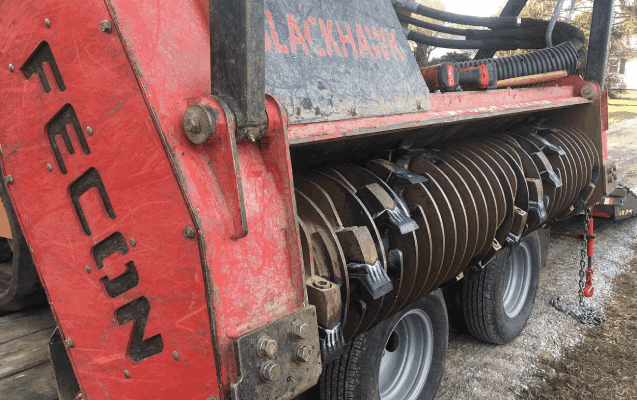
Bush hogging uses a heavy rotary mower pulled behind a tractor to knock down tall grass and light brush. Forestry mulching uses a tracked machine with a steel drum that grinds vegetation, including small trees, into a layer of mulch on the ground. One is built for open pasture. The other is built for land that has started turning back into forest.

What Is Bush Hogging?
Bush hogging is the go-to service when a field has outgrown a standard mower but is still mostly grass and soft growth. We hook a bush hog implement to a tractor and drive it across the property, cutting everything down to a few inches tall. It’s fast, straightforward, and well suited to flat, open ground.
The tradeoff is what it can’t handle. Bush hogs work best on:
- Overgrown pastures and hay fields
- Fence lines and ditch banks
- Light brush and tall weeds
- Seasonal field maintenance
Anything thicker than a sapling, and the machine starts to struggle. Bush hogging is maintenance work, not land clearing, and it leaves cut material lying on the surface to break down over time.
What Is Forestry Mulching?
Forestry mulching is the answer when brush, vines, and small trees have taken over. We run a tracked mulcher equipped with a rotary drum that shreds standing vegetation on the spot and spreads it across the ground as mulch. One machine and one operator do the work of a full clearing crew.
This method is a good fit for:
- Wooded lots being opened up for building or views
- Property lines reclaimed from overgrowth
- Steep or uneven terrain where tractors can’t go
- Dense brush, vines, and small-diameter trees
Because the mulcher grinds everything in place, there are no burn piles, no hauling, and no torn-up ground when the job is done.
Key Differences Side By Side
Choosing between the two services gets easier once you see them lined up against each other. The machines look different, work different ground, and leave your property in very different shape. Below is how we think about each factor when we walk a job.
Terrain And Vegetation
Bush hogging lives and dies by open, drivable ground. If a tractor can’t get to it safely, a bush hog can’t cut it. Forestry mulchers are tracked and low to the ground, so they handle slopes, rocky areas, and tight spots between standing trees without a problem. On vegetation, bush hogs top out at soft brush, while mulchers take down saplings and small trees without slowing down.
Soil And Environmental Impact
Both options are gentler on the land than bringing in dozers and excavators. Bush hogging barely touches the soil because the tractor stays on firm ground and the blades cut above it. Forestry mulching goes a step further by leaving a protective layer of mulch that holds moisture, slows erosion, and feeds the soil as it breaks down. Neither method rips up root systems or disturbs wildlife habitat the way traditional clearing does.
Cost And Efficiency
Bush hogging is usually the cheaper of the two because the equipment is simpler and the work is faster per acre on open ground. Forestry mulching costs more per hour, but it replaces multiple steps of a traditional clearing job, so the total often comes out lower than cutting, hauling, and grinding stumps separately. The right choice depends less on the hourly rate and more on what your property actually needs.
Which One Should You Choose?
Start with what’s growing on your land. If you’re looking at a pasture that got ahead of you or a field you want to keep in shape year to year, bush hogging is almost always the right tool. It’s affordable, efficient, and built for exactly that situation.
If you’re dealing with brush taller than your head, saplings, vines, or a wooded area you want opened up, forestry mulching is the better investment. It handles vegetation a bush hog can’t touch, works on ground a tractor can’t reach, and leaves the property usable the same day. When we’re unsure which service fits a property, we walk it first and recommend based on what we see, not what’s easier to schedule.
Get The Right Land Clearing Service For Your Property
Every piece of land is different, and the best way to know what yours needs is to have someone look at it. Reach out and tell us a little about your property, and we’ll set up a site visit and put together a free estimate with a clear recommendation and price. From there, you decide how you want to move forward.